
1221 W. Airport Fwy, Suite #217 (2nd Floor), Irving, TX 75062
1221 W. Airport Fwy, Suite #217 (2nd Floor), Irving, TX 75062
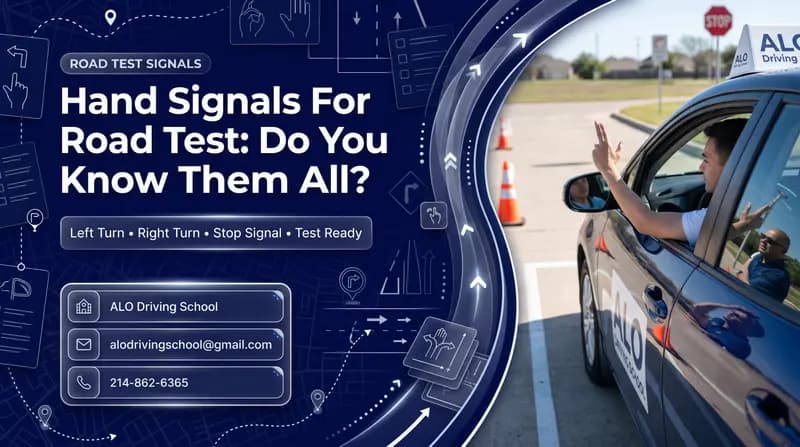
Learn hand signals for road test prep, then schedule your road test with ALO Driving. Call 214-862-6365 to book today.
Hand signals for road test prep helps you show safe communication before your exam. You need to know how to show a left turn, right turn, and stopping action with your arm. These skills matter when turn lights fail or when an examiner checks your road knowledge. This guide gives you a simple way to learn each signal without confusion. You will also see how ALO Driving School can help you schedule your road test with more confidence.
Hand signals prep matters because safe driving depends on clear communication. You must show other drivers what you plan to do before you turn, slow down, or stop.
Many learner drivers focus on parking, steering, and signs first. That makes sense, but small safety skills still matter. Hand signals for driving help you understand what to do if your vehicle signals fail. They also show that you can think beyond basic controls. If you are preparing for the DMV hand signals test in Irving, you should review each signal early. When you feel ready to plan your exam, you can choose a test time through ALO and prepare with a clear goal.
Hand signal skills give you a backup plan. You can still warn nearby drivers when lights do not work.
Your road test may not ask you to use hand signals while driving. Still, you should know them. A clear hand signals driving guide helps you remember the correct arm shape. It also helps you avoid panic if someone asks you a signal question. The main idea is simple. Your left arm tells others what comes next. You use it before the move, not after it starts.
These signals should feel simple after practice. Review them in a parked car first.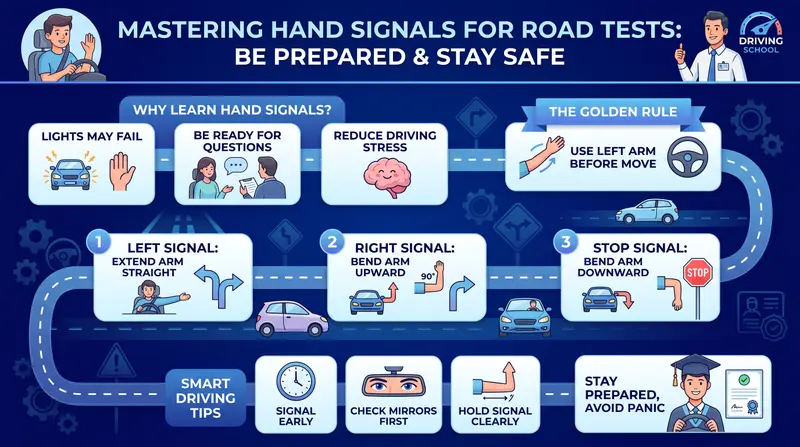
Hand signals for road test prep starts with three main arm positions. Each one uses your left arm through the driver-side window.
A left turn hand signal means you hold your left arm straight out. A right turn hand signal means you bend your left arm upward. For slowing or stopping, you bend the left arm downward. Do not wave your hand. Do not use unclear half-moves. Keep your arm steady, and always check traffic first. Clear signals help others understand your next action before you change speed or direction.
|
Driver Action |
Arm Position |
Simple Meaning |
|
Turn left |
Left arm straight out |
You plan to go left |
|
Turn right |
Left arm bent upward |
You plan to go right |
|
Slow or stop |
Left arm bent downward |
You plan to reduce speed |
|
Before signaling |
Check mirrors first |
You know what is nearby |
|
After signaling |
Move only when safe |
You control the timing |
You can remember the pattern with one rule. Straight means left, up means right, and down means slow.
You should understand hand signals because turn lights can fail. A working signal system is best, but you need a safe backup.
Malfunctioning turn indicators can happen without much warning. A bulb can burn out. A fuse can fail. Your dashboard may flash faster than usual. If this happens, stop safely when possible and inspect your lights. Signals when lights are broken can help for a short and safe trip, but they should not replace repairs. Broken lights can make your vehicle unsafe. Fix the issue as soon as you can.
Hand signals help in a problem moment. Working lights still matter most.
A road test feels easier when you prepare early. ALO Driving School helps Irving learners take that next step with less stress.
You should not wait until the last minute to review signals, stops, turns, and vehicle checks as Hand signals for road test is important. A scheduled test date gives you a real goal. It helps you plan practice and fix weak areas before test day. ALO Driving School gives you a local place to move forward when you feel ready. If you want a simple next step, you can plan your road test appointment here.
Road test prep should build real habits, not just short-term memory. Hand signals are one part of that safety mindset.
When you learn hand signals for learner drivers in Irving, you learn how to communicate under pressure. You also learn how to think before moving. This matters during turns, stops, parking lots, and traffic gaps. A good driver does not surprise other people. You show your plan early. You check the road. Then you move when space looks safe through using Hand signals for road test.
|
Test Prep Area |
What You Practice |
Why It Helps |
|
Hand signals |
Arm positions |
You show clear intent |
|
Light checks |
Turn signals and brake lights |
You avoid vehicle issues |
|
Stop practice |
Full stop and scan |
You improve timing |
|
Mirror use |
Front, side, and rear checks |
You see more risk |
|
Test planning |
Appointment and documents |
You lower stress |
Good preparation reduces fear. It also helps your examiner see safer habits.
Online learning can help if you want stronger driving knowledge before test day. It gives you time to review rules at home.
Some learners drive well, but they still feel unsure about signs, signals, and safety rules. ALO Driving School’s adult online option can help you study core driving ideas with more flexibility. It can support your road practice because knowledge and control work together. If you want extra rule support before your exam, you can review this online option from ALO while you keep practicing on the road.
You can practice hand signals in a parked car first. This helps you learn the motion before traffic adds pressure.
Sit in the driver seat with the window down. Say the action out loud, then show the signal. Use “left,” “right,” and “slow or stop” as your practice words. The slow down or stop hand signal needs extra review because many learners forget the downward arm. The hand signal to stop car should look firm and clear. Keep your hand steady so others understand your plan.
Learners often make small mistakes because they rush. Slow practice helps you avoid wrong arm positions.
Some learners bend the left signal by mistake. Others raise the right signal too low. Some wave when they should hold steady. You should also avoid signaling before checking traffic. A hand signal does not replace awareness. You still need mirrors, safe speed, and good timing. Practice with someone watching you. Ask them to correct your arm shape right away.
Short practice works well. Accuracy matters more than speed.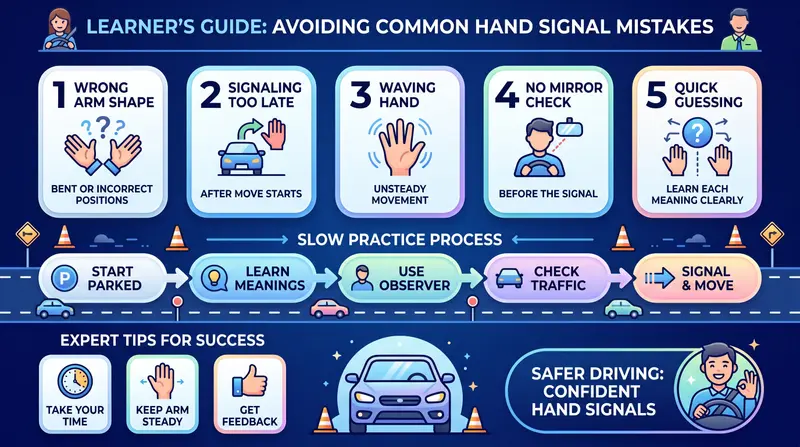
Test-day readiness includes your signals, your car, and your documents. Do not leave those checks for the final minute.
Check your turn lights, brake lights, mirrors, horn, tires, and seatbelt. Make sure your documents match your appointment needs. Review the three hand signals once more before leaving home. If your vehicle lights do not work, fix them before the test. Do not hope the problem goes unnoticed. A prepared driver feels calmer because fewer surprises appear at check-in.
They are arm signals for left turns, right turns, and slowing or stopping. You should know them before your road test.
Hold your left arm straight out through the driver-side window. Keep it steady so others understand your plan.
Bend your left arm upward at the elbow. Show it clearly before you turn right.
Use it when you need to show slowing or stopping by hand. Your left arm should point downward in a clear position.
Yes, ALO Driving School can help with road test scheduling. Call 214-862-6365 before booking.
Now you know hand signals for road test prep and why each signal matters. Review the three signals, check your vehicle, and practice before your appointment.
ALO Driving School can help you move from practice to test day. Prepare early, stay calm, and schedule when you feel ready.
 1
1 2
2 3
3
 5
5